Six Trips to the Gallery Window
What imposter syndrome cost me, and what a 50% commission taught me about worth
In 1986, as I was leaving Pendleton, my mentor offered me his studio, the highest-volume portrait business in town. I spent two years deciding, and in the end I declined. (I tell that story here.)
Walking away from a sure thing comes with a question attached: What if I was wrong? Portland was full of photographers, and many of them had more talent than I believed I had. Within weeks, a quieter question started following me around: Who am I to think I’ll make a splash here?
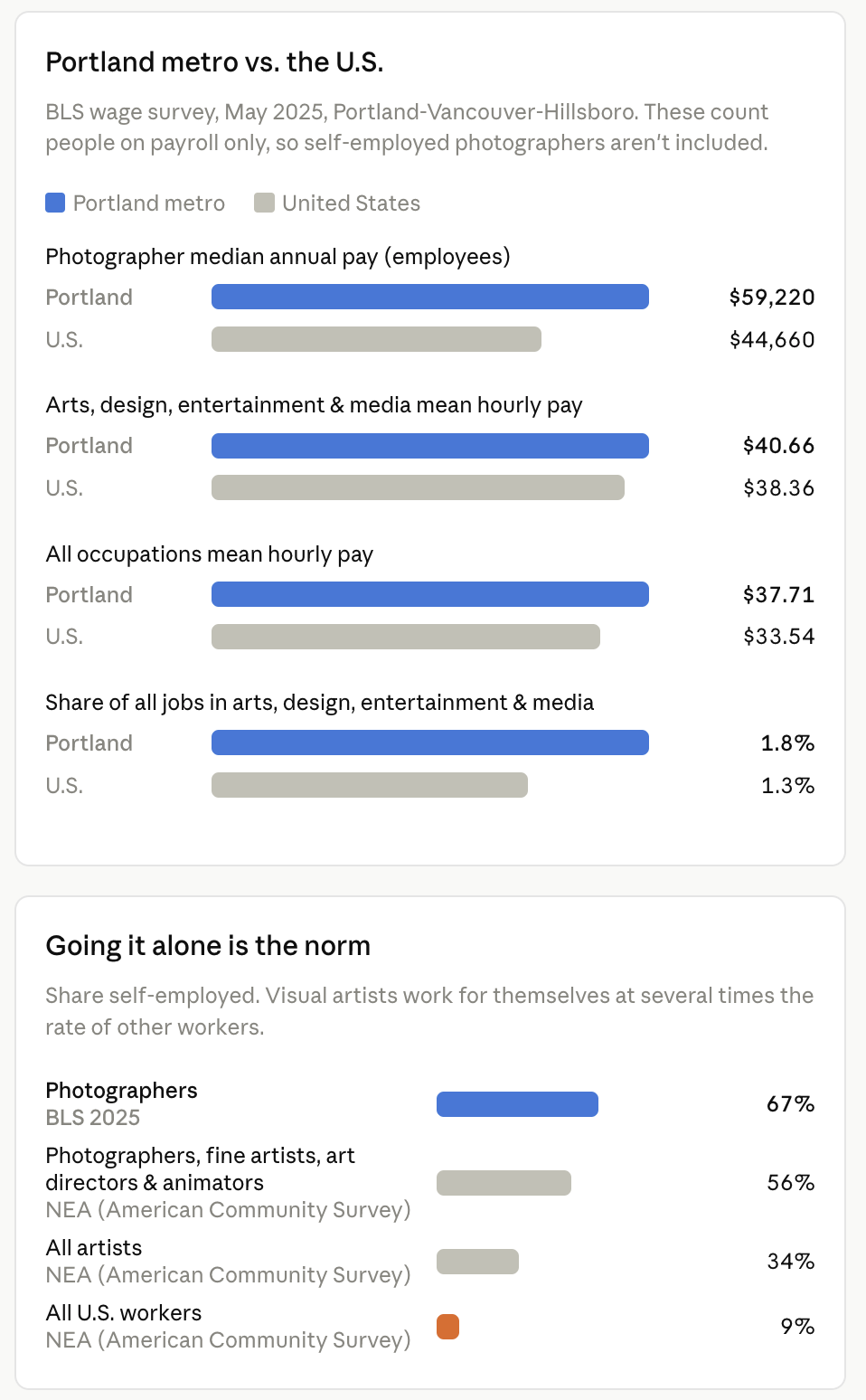
That pond is still crowded. Today, arts, design, and media jobs make up a noticeably larger share of the Portland-area workforce than they do nationally.
The window
There was a gallery in the heart of downtown Portland with a big front window. The pieces inside were large, bold, and confident. They stopped people on the sidewalk, including me.
I never went in. I’d stand there, study the work, measure my portfolio against it, and keep walking.
It took me about six trips before I finally pushed the door open with a few samples under my arm. It felt like asking someone out for the first time.
You’re not the only one standing outside
That feeling has a name. Imposter syndrome is the belief that you’re a fraud about to be found out, no matter how much evidence says otherwise.
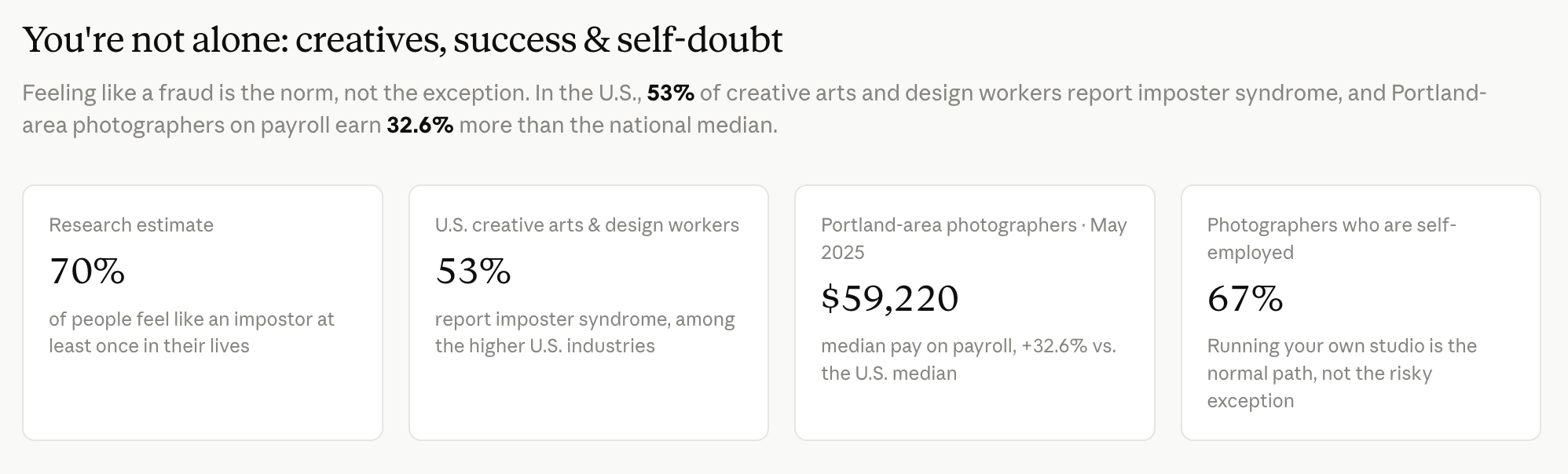
It’s far more common than most of us admit. Researchers estimate that about 70% of people feel like an impostor at least once in their lives. Among U.S. creative arts and design workers, 53% report it, putting creatives in the upper half of American industries, alongside law and science.
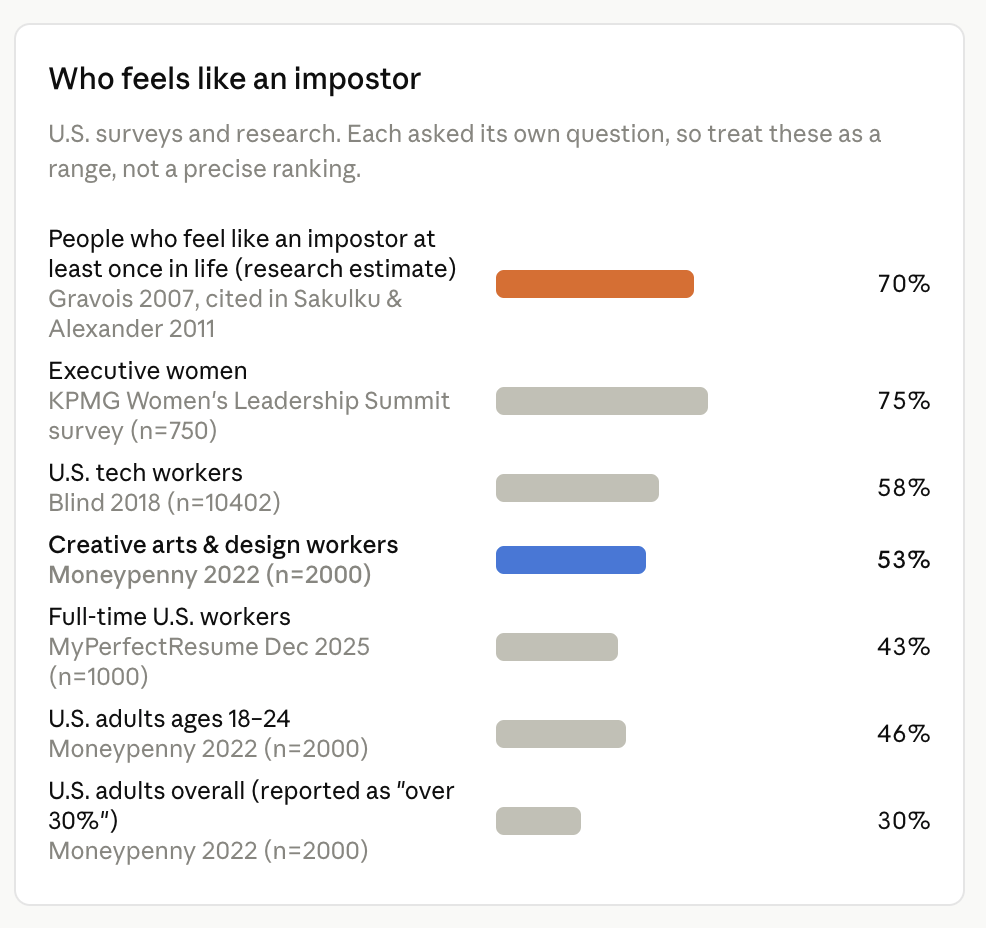
So if you feel like a fraud, you’re not an outlier. You’re in the majority.
The moment I found my voice
Back inside that gallery, the conversation went fine until one detail landed: the gallery kept 50%.
That’s when I found my voice. Suddenly I wasn’t nervous anymore. I was indignant.
I had mowed nearly every blade of grass in my neighborhood to buy my first car, a station wagon, so I could haul gear, reach more clients, and save for my dream of becoming a photographer. I had spent a heap of money producing my work. Then framing. And those costs would come out of my half? It sounded deeply unfair.
I walked out without a deal.
Then I signed a lease
Years later, I started paying for commercial real estate. Then came marketing. Maintenance. Furniture. Utilities, permits, insurance, and the hundred small costs nobody puts in the brochure. All of it just to keep a door open so people can walk in and see the work.
That 50% started to look very different. The gallery was never taking half of my art. It was covering everything it takes to put art in front of a buyer. Today I own a gallery myself, and I can tell you: that was a fair offer. I should have taken it.
Here’s what I didn’t understand at the time. Most of us in this field end up running our own business whether we plan to or not. Two out of three photographers are self-employed, compared with fewer than one in ten American workers overall.
That means we carry the doubt twice: once about the work, and again about every price we quote and every deal we’re offered. My objection to the 50% wasn’t wisdom. It was inexperience dressed up as principle.
What I’d tell my younger self at that window
Walk in on the first trip. The work in the window wasn’t made by people without doubt. It was made by people who acted anyway.
Separate the feeling from the facts. Imposter syndrome feels like information. It isn’t. It’s a feeling, and it shows up most for the people who care most.
Learn what things actually cost before you decide what’s fair. You can’t price your work, or judge someone else’s offer, until you understand what it takes to sell it.
Your nerves aren’t a verdict. They’re a sign you’re standing at the edge of something worth doing.
Decades later, my work hangs in a gallery, my own. The voice that asked who am I? still shows up now and then. I’ve just stopped letting it decide which doors I walk through.
If you’re an artist standing outside your own window right now, come in (by appt.)
HOW TO VIEW OUR WORK
Studio B Gallery’s door is not always open. Why?.. we’re a working portrait studio by day. Brian’s work takes him off-site often.
1 - View our growing collections online.
2 - Schedule a pressure-free viewing appointment (we won’t follow you around unless you ask.) if you’d like to see in-person first.
3 - CHECK OUT OUR EVENTS PAGE!.. We host semi-monthly events called “WOW - Wednesday Originals and Wine.”
We look forward to sharing our collections in-person and inspiring other artists to do the same.
Brian